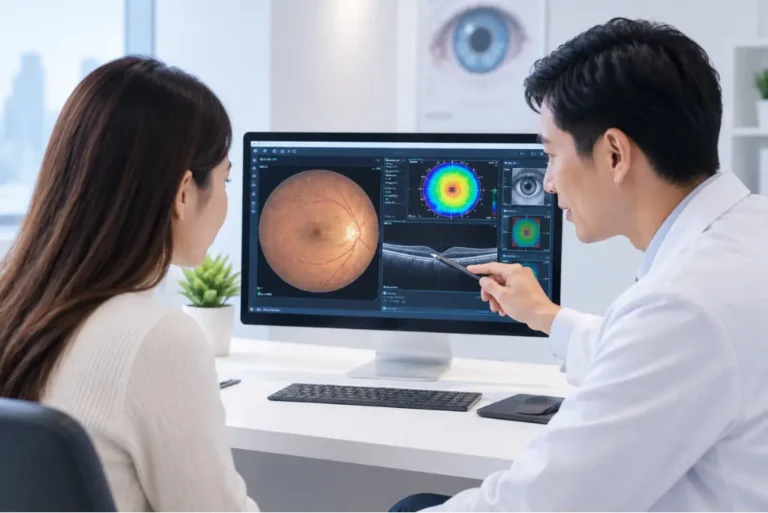

April marks Women’s Eye Health Month and Presbyopia Awareness Month — an important reminder that women face unique eye health risks across different life stages.
From hormonal fluctuations to increased longevity, women are statistically more likely to develop certain eye conditions. Understanding how vision changes over time — particularly presbyopia — allows women to take proactive steps in protecting long-term eye health.
At Optimax Eye Specialist in Malaysia, structured eye care supports women through every stage of life — from young adulthood to post-menopausal years.
Why Women Are at Higher Risk for Eye Conditions
Several factors contribute to increased risk among women:
- Hormonal changes during pregnancy and menopause
- Higher prevalence of autoimmune conditions
- Longer life expectancy (increasing cataract and macular risk)
- Dry eye syndrome related to hormonal shifts
These changes do not always produce immediate symptoms, which is why structured eye health screening is essential.
Regular review at a trusted eye specialist for families in Malaysia supports early detection and appropriate management.
Understanding Presbyopia: A Natural Age-Related Change
Presbyopia typically develops after age 40. It is not a disease, but a gradual loss of near focusing ability as the eye’s natural lens becomes less flexible.
Common signs include:
- Difficulty reading small print
- Needing brighter light
- Holding reading material farther away
- Eye strain during close work
In Malaysia, presbyopia treatment options include:
- Prescription reading glasses
- Multifocal lenses
- Laser vision correction options (for suitable candidates)
- Lens-based surgical solutions
A comprehensive consultation determines suitability based on lifestyle, eye health, and long-term needs.
Vision Changes Through Life Stages
Young Adults
Hormonal contraceptives and pregnancy may temporarily affect vision and dry eye symptoms.
Midlife (40s–50s)
Presbyopia becomes noticeable. Structured assessment ensures changes are age-related and not underlying pathology.
Post-Menopause
Increased risk of cataracts, glaucoma, and dry eye syndrome requires regular monitoring.
Early intervention supports better outcomes.
Why Structured Eye Care Matters for Women
Women often prioritise family health over their own. However, delayed eye assessments may allow preventable conditions to progress.
A comprehensive eye checkup in Kuala Lumpur or other Optimax centres across Malaysia includes:
- Visual acuity testing
- Refraction assessment
- Eye pressure measurement
- Retinal evaluation
- Cataract and macular screening
This structured pathway ensures continuity of care across decades.
International Perspective: Eye Care in Malaysia
With “Visit Malaysia 2026” encouraging healthcare travel, international patients increasingly seek high-quality yet affordable presbyopia treatment in Malaysia.
Malaysia offers:
- Advanced diagnostic platforms
- Experienced eye specialists
- Structured follow-up systems
- Competitive treatment pricing
Women travelling to Kuala Lumpur for eye care benefit from integrated consultation and recovery support within one coordinated system.
Frequently Asked Questions
1. Why are women at higher risk for certain eye diseases?
Hormonal changes, autoimmune conditions, and longer life expectancy contribute to increased risk of dry eye, cataracts, and macular conditions among women. Regular eye health screening helps detect early changes.
2. At what age does presbyopia usually begin?
Presbyopia typically develops after age 40, when the eye’s natural lens gradually loses flexibility, affecting near vision.
3. What presbyopia treatment options are available in Malaysia?
Treatment options may include reading glasses, multifocal lenses, laser vision correction (for suitable candidates), or lens-based surgical solutions following specialist assessment.
4. How often should women undergo an eye examination?
Women over 40 are generally advised to have comprehensive eye checkups annually, especially if they experience visual changes or have risk factors such as diabetes or hypertension.
5. Is presbyopia reversible?
Presbyopia is a natural age-related change. While it cannot be reversed, visual clarity can be improved with appropriate corrective options recommended by an eye specialist.
If you are experiencing age-related vision changes or would like a structured women’s eye health assessment in Malaysia, schedule a consultation with Optimax Eye Specialist for personalised guidance.