
Good Vision Doesn’t Always Mean Healthy Eyes
If you are living with diabetes and your vision still seems perfectly normal, it’s natural to assume your eyes are healthy.
At Optimax Eye Specialist, this is one of the most common misconceptions we hear.
Many diabetes-related eye conditions develop quietly, without pain, blurred vision or obvious warning signs. In fact, some people only discover changes during a routine eye examination, long before their eyesight is affected.
This is why regular diabetic eye screening plays such an important role in protecting long-term vision.
November marks Diabetes-related Eye Disease Awareness Month, while World Diabetes Day on 14 November reminds us that early action and regular health screening remain essential parts of diabetes care.
Diabetes Affects More Than Blood Sugar
Most people associate diabetes with glucose monitoring, healthy eating and medication.
While these are all important, diabetes also affects the body’s smallest blood vessels—including those that nourish the retina at the back of the eye.
Over time, persistently elevated blood sugar may damage these delicate blood vessels, increasing the risk of several eye conditions, including:
- Diabetic retinopathy
- Diabetic macular oedema
- Cataracts
- Glaucoma
The encouraging news is that many of these conditions can be detected early and managed more effectively through regular eye examinations.
Why Diabetic Eye Disease Often Goes Unnoticed
Unlike many other health conditions, diabetic eye disease rarely causes symptoms during its early stages.
Your vision may remain clear.
Reading may still feel comfortable.
Driving may feel completely normal.
Yet subtle changes may already be taking place inside the retina.
Because these changes are invisible without specialised examination, waiting until vision becomes blurry may mean waiting too long.
Early screening allows our clinical team to detect retinal changes before they begin affecting everyday life.
What Is Diabetic Retinopathy?
Diabetic retinopathy is one of the most common diabetes-related eye conditions.
It develops when prolonged exposure to high blood sugar damages the tiny blood vessels within the retina.
As the condition progresses, these blood vessels may:
- Leak fluid
- Bleed
- Become blocked
- Trigger the growth of fragile new blood vessels
Without appropriate monitoring and treatment, these changes may eventually affect vision.
The good news is that diabetic retinopathy is often manageable when identified early through routine retinal examinations.
Eye Screening Is Different From a Routine Vision Test
Many people believe that reading the smallest letters on an eye chart is enough to confirm healthy eyes.
In reality, diabetic eye screening looks far beyond visual acuity.
Depending on your individual needs, a comprehensive examination may include:
- Vision assessment
- Retinal examination
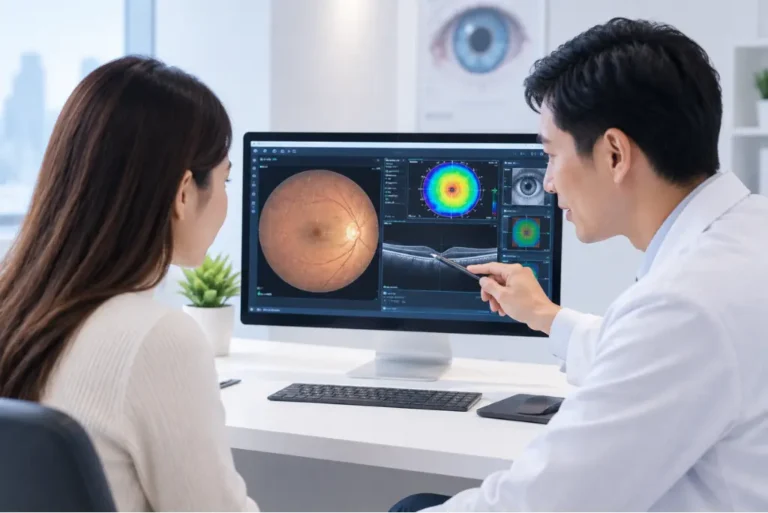
- Digital retinal imaging
- Optical Coherence Tomography (OCT), where clinically indicated
- Eye pressure measurement
- Assessment of overall ocular health
Together, these assessments provide a clearer picture of your eye health and allow subtle retinal changes to be monitored over time.
Looking After Your Eyes Is Part of Looking After Your Diabetes
Managing diabetes is about more than controlling blood sugar.
Long-term eye health is also influenced by:
- Maintaining healthy blood glucose levels
- Managing blood pressure
- Controlling cholesterol
- Staying physically active
- Following medical advice
- Attending regular diabetic eye examinations
These everyday decisions work together to reduce the risk of diabetes-related eye complications and support lifelong vision.
Our Approach to Diabetes-Related Eye Care
At Optimax Eye Specialist, we believe the best outcomes begin with early detection.
Our comprehensive eye examinations combine advanced diagnostic technology with the clinical expertise of our optometrists and ophthalmologists to assess retinal health, monitor changes over time and recommend personalised care based on each patient’s individual needs.
For patients living with diabetes, regular monitoring allows us to identify changes early and determine the most appropriate management plan before vision is significantly affected.
Rather than waiting for symptoms to appear, our focus is on helping patients stay one step ahead through preventive, evidence-based eye care.
Early Action Protects Long-Term Vision
One of the most important messages of World Diabetes Day 2026 is simple: early action matters.
The same principle applies to eye health.
Many diabetes-related eye conditions can be managed more successfully when detected before vision begins to change.
Regular eye examinations do more than identify existing problems—they provide reassurance when everything is healthy and create a valuable baseline for monitoring future changes.
Protecting your eyesight isn’t about reacting to problems.
It’s about preventing them wherever possible.
Frequently Asked Questions
1. If my vision is clear, do I still need diabetic eye screening?
Yes. Early diabetic eye disease often develops without noticeable symptoms. Regular screening helps detect retinal changes before they begin affecting vision.
2. How often should people with diabetes have their eyes examined?
The appropriate frequency depends on your medical history, diabetes control and eye health. Our optometrists and ophthalmologists can recommend a screening schedule based on your individual needs.
3. What is diabetic retinopathy?
Diabetic retinopathy occurs when high blood sugar damages the retina’s tiny blood vessels. Early detection and ongoing monitoring are important for protecting long-term vision.
4. What happens during diabetic eye screening?
A diabetic eye examination may include retinal imaging, vision assessment, eye pressure measurement and other tests to evaluate retinal and overall eye health.
5. Can diabetic eye disease be prevented?
Good diabetes management, healthy lifestyle habits and regular comprehensive eye examinations can significantly reduce the risk of vision-threatening complications, although no strategy can completely eliminate risk.
Book Your Comprehensive Eye Examination
If you are living with diabetes, don’t wait for changes in your vision before having your eyes examined.
At Optimax Eye Specialist, our team provides comprehensive diabetic eye assessments using advanced diagnostic technology to help detect retinal changes early and support long-term eye health.
A simple examination today may help protect your sight for many years to come.