In children’s eye care, knowing when to escalate is just as important as knowing when not to. While many childhood vision concerns can be managed safely through routine optometric care, certain findings require the involvement of a paediatric eye specialist to protect a child’s long-term visual development. Understanding this referral decision helps parents feel confident that their child is receiving the right level of care, not unnecessary intervention.
At Optimax Eye Specialist, children’s eye care follows a structured pathway. Initial assessment and monitoring are led by trained optometrists, with referral to paediatric ophthalmology only when clinical indicators justify specialist involvement.
Why Referral Decisions Matter in Children
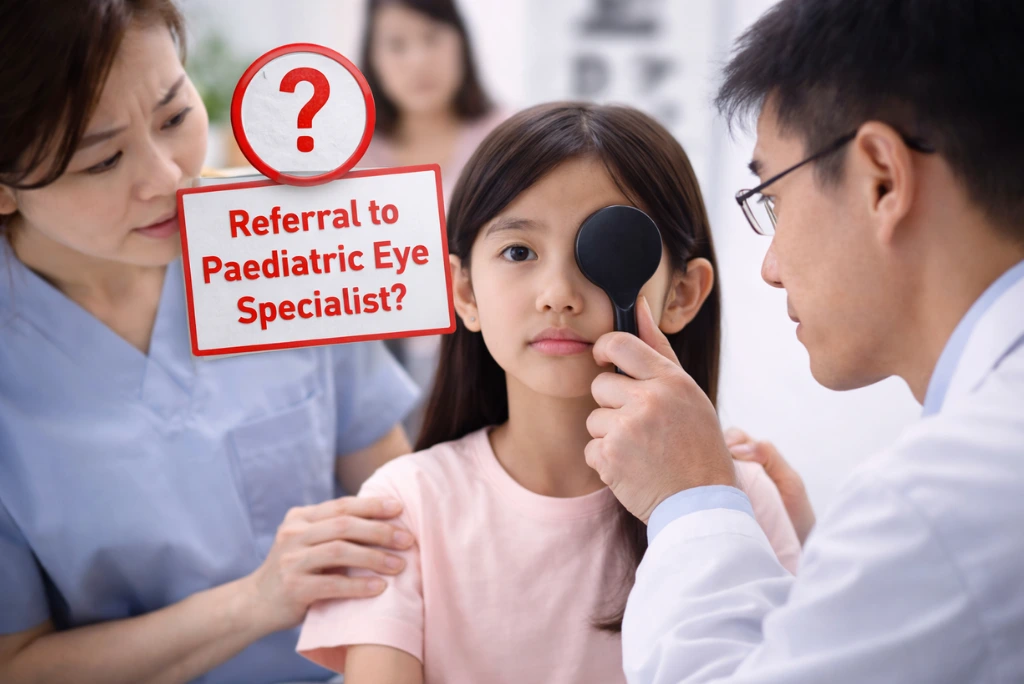
Children’s eyes are still developing, and inappropriate treatment — whether through delay or over-treatment — can affect vision permanently. This is why paediatric eye care relies on clear referral thresholds, not assumptions or routine escalation. A referral to a paediatric eye specialist is made when a condition falls outside the scope of routine management or when medical or surgical expertise is required.
Situations That Commonly Require Specialist Referral
Referral is typically recommended when a child presents with eye misalignment that persists or worsens, reduced vision that does not improve with standard correction, signs of amblyopia that require medical oversight, congenital or early-onset cataracts, unexplained vision loss, abnormal eye movements, or structural concerns affecting the eyelids or eyes. Eye trauma, severe infections, and conditions associated with neurological or developmental disorders also warrant specialist assessment.
These are not situations for watchful waiting alone. Early specialist input can significantly influence long-term outcomes.
When Optometrist-Led Care Remains Appropriate
Many parents worry that any abnormal finding automatically means specialist care is required. In reality, most childhood eye concerns — including refractive errors, mild focusing issues, and routine monitoring — are effectively managed by optometrists trained in paediatric assessment. Clinics such as OptiKidz® focus on identifying which children need continued observation and which require escalation, ensuring care remains proportionate and evidence-based.
What a Paediatric Eye Specialist Adds
A paediatric eye specialist brings advanced diagnostic capability, medical management expertise, and surgical decision-making where necessary. Their role is not to replace optometric care, but to step in when a condition requires intervention beyond routine monitoring. This collaborative model ensures children receive specialist care only when clinically justified.
How Optimax Manages Referral and Escalation
Optimax operates within an integrated care model, allowing children to move seamlessly from optometric assessment to specialist care within the same system. Clinical findings, history, and progress are shared accurately, reducing delays and duplication. Parents benefit from clear explanations, structured follow-up plans, and confidence that escalation decisions are based on clinical need rather than precaution alone.
Making the Right Decision for Your Child
If you’ve been advised that your child may need to see a paediatric eye specialist, or if you’re unsure whether escalation is necessary, seeking clarification within a structured eye care system can provide reassurance. The goal is not to rush into specialist care, but to ensure that no condition affecting visual development is missed or delayed.
FAQ
Does every child with vision problems need a paediatric eye specialist?
No. Many childhood eye concerns are managed effectively by optometrists, with referral reserved for specific clinical indicators.
Who decides when a referral is needed?
Referral decisions are based on clinical findings identified during optometric assessment and monitoring.
Can my child be referred within Optimax if needed?
Yes. Optimax uses an integrated care pathway that allows seamless referral to paediatric eye specialists when required.
If you have concerns about your child’s eye health or have been advised to consider specialist assessment, book a consultation with Optimax Eye Specialist to ensure your child receives the appropriate level of care at the right time.